

Gram Shiksha Sangam: Beyond the school – a vibrant summer of learning in villages
Media Contact
ICRW GEMS Programme | Godda District, Jharkhand | June 2026
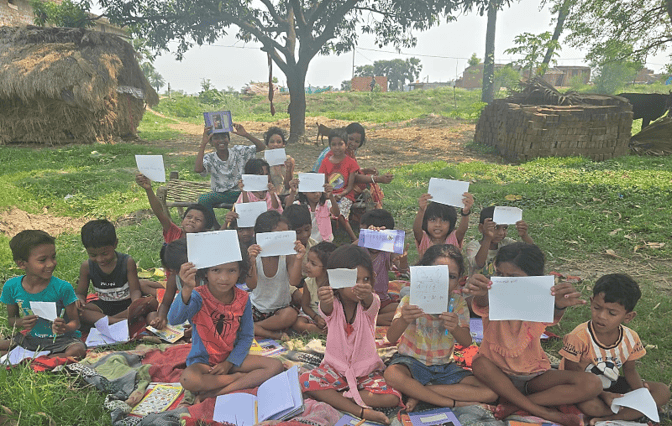
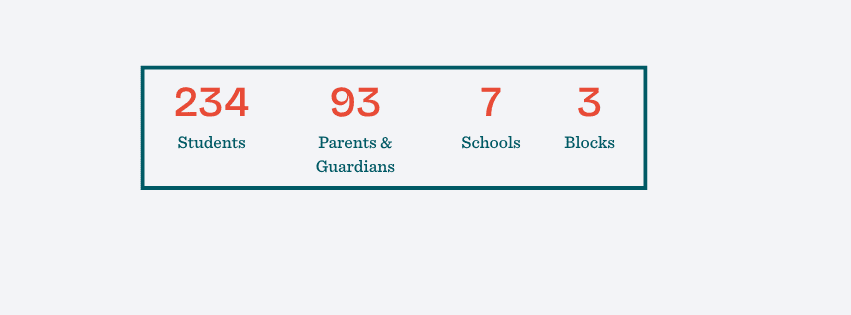
Schools had closed for the summer. But in seven villages across Godda district, something unusual was happening; children and parents gathered to play, listen, laugh, and read together. Communities engaged in listening and conversations about themselves and about learning. That was the spirit of Gram Shiksha Sangam — a Jharkhand Education Project Council initiative facilitated by ICRW Asia across three blocks of Godda: Poreyahat, Pathargama, and Mahagama. Over two weeks in late May and early June 2026, the campaign brought education back into public life, turning panchayat courtyards, school grounds, and village common spaces into vibrant sites of activity, conversation, and joy.
Play, stories and more
In Bisaha, the panchayat bhavan came alive with 23 children and 27 mothers. Children decorated the walls with education posters and arranged books around the room. A simple activity like writing their name on a paper card and finding it in a shuffled pile sparked laughter, curiosity, and, unexpectedly, a conversation about honesty when some children quietly swapped papers with friends who couldn’t find their own.
35 children sat together through blazing June heat and refused to leave. Facilitator read aloud from a book, and soon children and parents both leaned in. At the end, the children had only one request: “Can we do this again next week? During school holidays, so all of us can come together.”
In Dalawar, the village pradhan joined the programme. Children picked riddles, solved them with gusto, and then chose their favourite game, -Paani, playing together in the afternoon sun while parents looked on, visibly moved.
“The children were so engaged that even in the extreme heat, they stayed till the very end. The parents who came said they hadn’t seen their children like this in a while.”
— Field Staff, Bisaha
Conversations That Matter
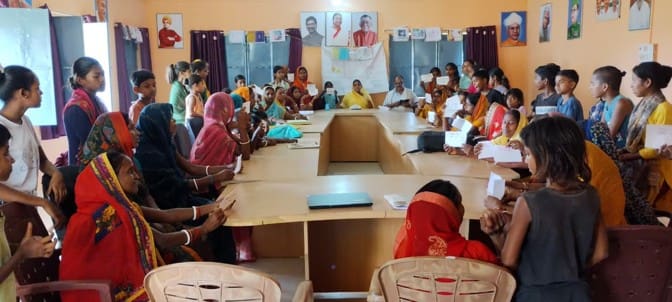
Alongside the children’s sessions, GEMS facilitators held parallel meetings with parents, — primarily mothers from Self Help Groups, on a topic that rarely gets discussed openly: the relationship between parents and children.
In Basanpur, 27 women from (Self Help Groups) SHGs gathered to talk about the growing communication gap at home. When asked whether they spend enough time with their children, most admitted they did not. The conversation turned candid: mobile phones, household demands, and the habit of scolding rather than listening. One mother reflected that when she was beaten as a child, she stopped going to school. “A child who is hit goes quiet for a while,” she said, “then goes back to making the same mistake.” Others agreed: the smartest child in class is never the one who gets hit the most.
In Bohra,18-20 women explored Parent-Teacher Meeting (PTM) participation and parent–child relationships. Only 3 of the 11 mothers whose children attend government school had attended a PTM in the past. When asked what they discussed with teachers, the answers were narrow: exam results, school uniforms, and hygiene reminders. One woman recalled being told, when she raised a concern about a misbehaving child, “What can we do? We have so much office work.” Another was threatened that her child’s name would be struck from the rolls if she continued asking questions.
“My son loved singing, but I always forced him to study. This year, he came first in a singing competition in Punjab — where he’s now completing his graduation.”
— Mother, Bohra CLF (Cluster Level Federation) Meeting
These conversations surfaced something important: parents want to be engaged but often don’t know how or feel unwelcome when they try.
Community Leadership in Action
What made Gram Shiksha Sangam distinctive was not just the programme content, but who showed up to make it happen. In Deobandha, the mukhiya presided. The chairperson organized the event and used the platform to speak on child marriage and violence. In Madhuri Panchayat, panchayat representatives and PRADAN team members attended a preliminary meeting, and despite the occasion being World Environment Day, they committed to hosting a fuller session for parents.
In Ratanpur, the nodal teacher at the middle school was an enthusiastic ally from the start; connecting the team with SHG members, introducing the SMC chairperson, and offering the panchayat bhavan for a 5 June meeting with all local stakeholders.
In Dalawar, the most quietly powerful outcome was a community decision: parents, on their own initiative, agreed to gather children every day in the village garden for an hour of play and learning without the need of a facilitator.
Gram Shiksha Sangam was a short campaign. But its reverberations point to something larger: when communities are given a structure, a space, and a reason to gather around children’s learning, they take ownership. Parents who feel seen and equipped begin to engage differently — at school, at home, and with each other.