
A Visit to Utopia: Mexico City, Care, and Feminist Futures
Media Contact
What if our vision of utopia was simple: a place where each one of us could receive the care we need?
We all need care at different moments of our lives. Yet far too often, those needs go unmet. In Mexico City, however, bold feminist leadership is showing what is possible when we invest in care as an essential infrastructure for thriving communities.
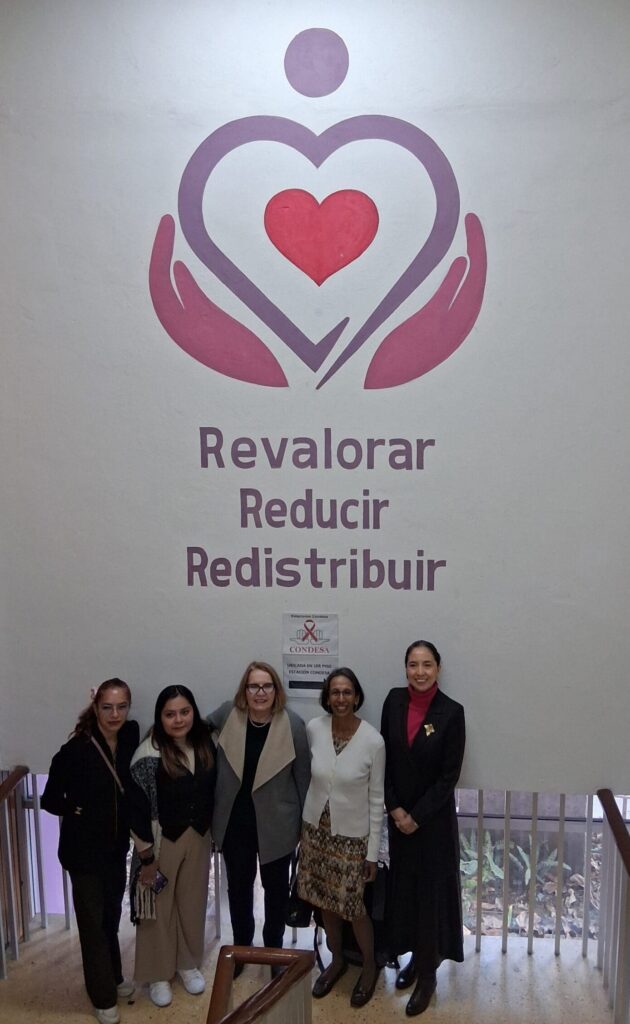
In January, I had the pleasure of meeting Mexico City’s Deputy Mayor, Maria Elena Esparza Guevara, and accompanied her on a visit to one of the city’s newly opened care blocks. Seeing their vision in action offered a glimpse into how thoughtful policy, local leadership, and community-centered design can transform lives.
This initiative is part of an audacious plan launched by Mayor Clara Brugada when she took office in 2024. Her idea was to take neglected urban spaces—areas long marked by poverty and crime—and convert them into vibrant community hubs offering services residents most need.
These spaces are called Units for Transformation and Organization for Inclusion and Social Harmony or Utopias for short. What were once deprived neighborhoods are now pulsing with life, opportunity, and hope.
The care center we visited—Sistema Publico de Cuidados—is embedded within one of the Utopias. Even from the outside, the center signals something different, with signage welcoming community members to “the home of the three R’s”: reduce, redistribute, and reward care.
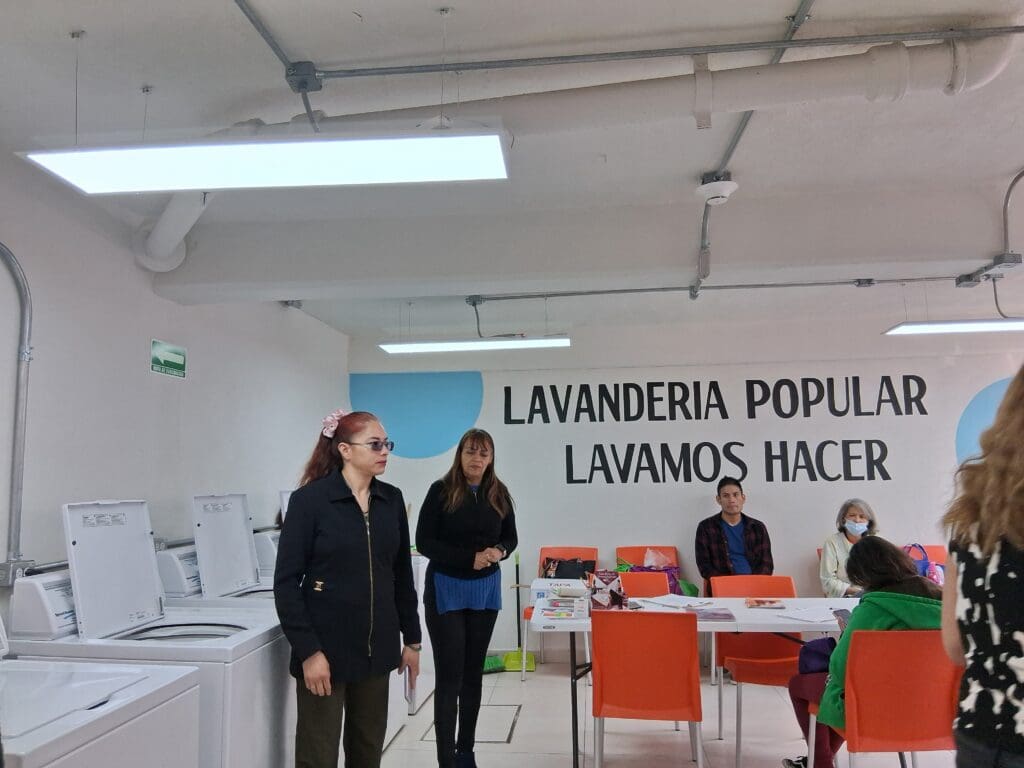
Inside, thoughtfully arranged childcare spaces, with intentionally designed areas for children with special needs, are filled with learning materials and toys. Families can access practical services including prepared meals, laundry facilities, and community support.
Importantly, the center also challenges long-standing social norms around caregiving. Dedicated spaces for men, and particularly young fathers, provide opportunities to learn childcare and household skills in a supportive environment. This normalizes caregiving as a shared responsibility.
Elsewhere in the center, residents can access physical therapy services, quiet rooms for rest and respite, and gathering spaces where older adults can connect and build community.
By redistributing care responsibilities across families and providing safe spaces for community life, the Utopias are helping strengthen social cohesion and enabling residents to access much-needed resources.
The Utopias are not cost centers—they are a critical investment. Decades of research, including work by the International Center for Research on Women (ICRW), demonstrate that investing in care provides a feminist stimulus. It creates jobs in the care sector itself, enables women and unpaid caregivers to participate more fully in the economy, and ensures that people who need care have the support they need to achieve their full potential.
Mexico is dedicated to taking the vision further. In August 2025, as part of the Mexican government’s commitment to strengthen its national care system, President Claudia Sheinbaum announced plans to establish 1,000 new childcare centers around the country.
But governments can’t do it alone. The Utopias offer a powerful example of what public leadership and private investment can achieve. Scaling this vision—across Mexico and beyond—will require engagement from other sectors as well.
ICRW is working with partners across different regions to help illuminate these pathways. In Kenya, for example, ICRW-Africa collaborated with other stakeholders to help the government develop the country’s first National Care Policy, offering insights that can resonate in other contexts. Building on this work, ICRW has launched new rapid-response research in both Kenya and Mexico to better understand how employer-provided care can complement public systems.
At the same time, another promising area that needs more research is the cooperative care economy. While there is growing evidence on investments that can unlock opportunities for women as entrepreneurs in the care economy, it’s critical to recognize that care services don’t need to turn a profit to be sustainable. Some of the most effective and sustainable care models are cooperatives.
As we celebrate International Women’s Day on March 8, fifty years after the UN established a day to commemorate the world’s women, these efforts feel particularly resonant.
The feminist movement of the 1970s called for the world to recognize, reduce, redistribute, and reward care. Campaigns like Wages for Housework helped bring visibility to the invisible labor that sustains families, communities, and economies.
Our movement knew then what utopia looked like. We haven’t stopped our work to make it a reality. Today, in Mexico City, that vision is taking shape—and reminds us that together, we can build a better future for all.